Four kilometres, split,and a photon that knows both roads.
LIGO is not a telescope pointed at the sky. It is a ruler laid along spacetime. A laser is split down two arms. The arms are equal until a wave passes. Then they are not.
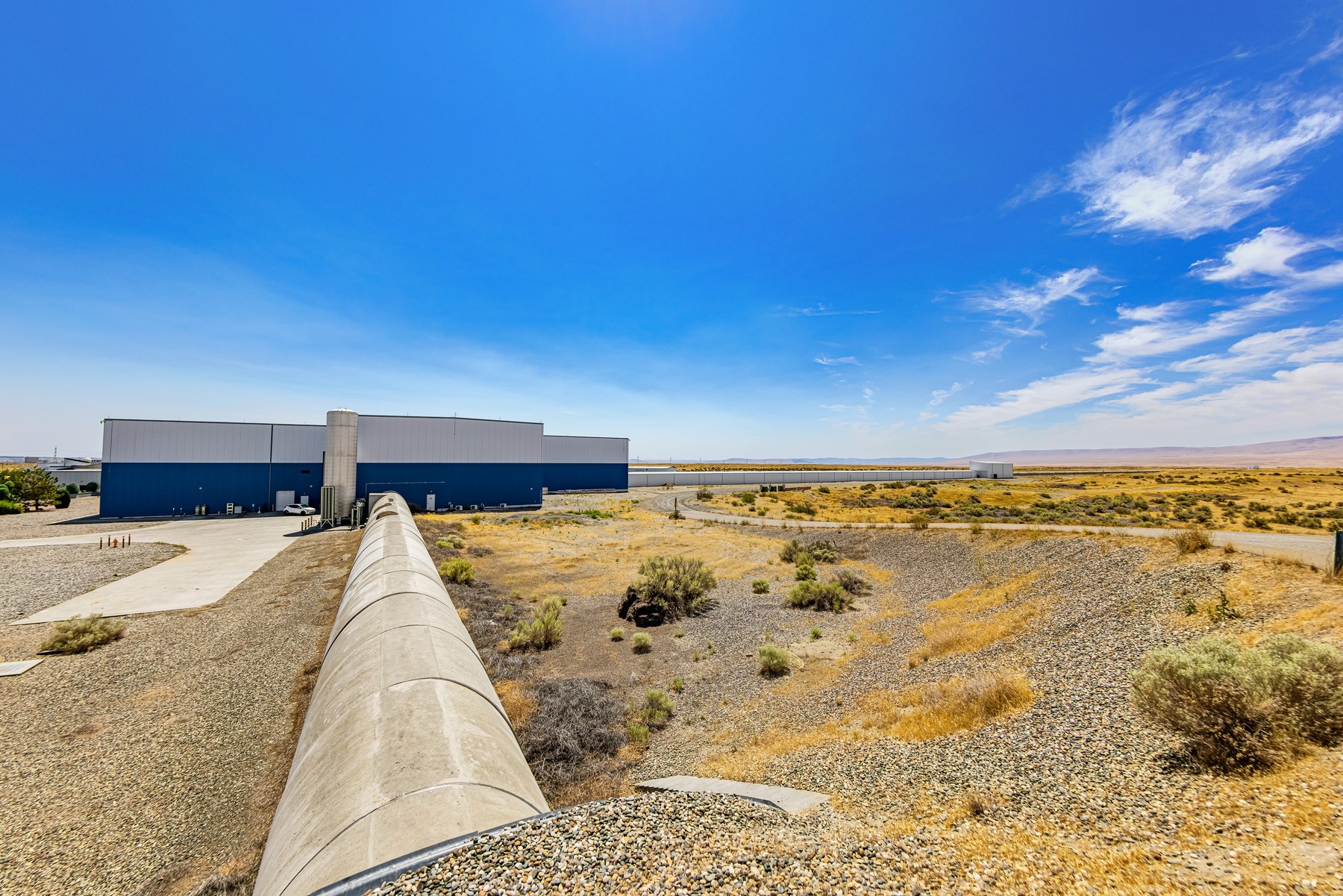
Documentary image · NOIRLab / LIGO / NSF / AURA / T. Matsopoulos
LIGO Hanford Observatory, Washington. Two four-kilometre vacuum arms on the Columbia Basin.
Real strain is about 10−21. The shift drawn here is exaggerated so the geometry can be seen. Fabry–Pérot cavities multiply the effective path.
Hanford
LIGO Hanford · Washington
One L-shaped detector in sagebrush country. Two four-kilometre vacuum tubes. The same wave that reaches Louisiana reaches here milliseconds later, or earlier, depending on the sky.
Livingston
LIGO Livingston · Louisiana
A second, independent interferometer. Coincidence is the first filter: a real wave is a worldwide agreement, not a local tremor.
The network
Virgo · KAGRA · LIGO-India (coming)
More sites mean better sky location. Virgo in Italy, KAGRA in Japan. A detection is a collaboration, not a single machine’s opinion.
Hard · measured
What the detector actually records
The output is a time series of strain. Buried in it: the rumble of the ground, the grain of the laser itself, scattered light, a truck on a distant road. Matched filters (templates from general relativity) try on families of chirps until one fits the mess. A candidate is then followed by parameter estimation: which masses, which spins, which distance make the waveform fit.
Arm length 4 km (LIGO). Design strain sensitivity on the order of 10−23 / √Hz in the most sensitive band. Network detections are published in the Gravitational-Wave Transient Catalog (GWTC) via GWOSC.