We never see the hole.We see what it does to everything else.
“Invisible” is too crude. The horizon itself does not shine. Around it, light, gas, stars and spacetime all leave traces: different kinds, independent, mutually reinforcing.
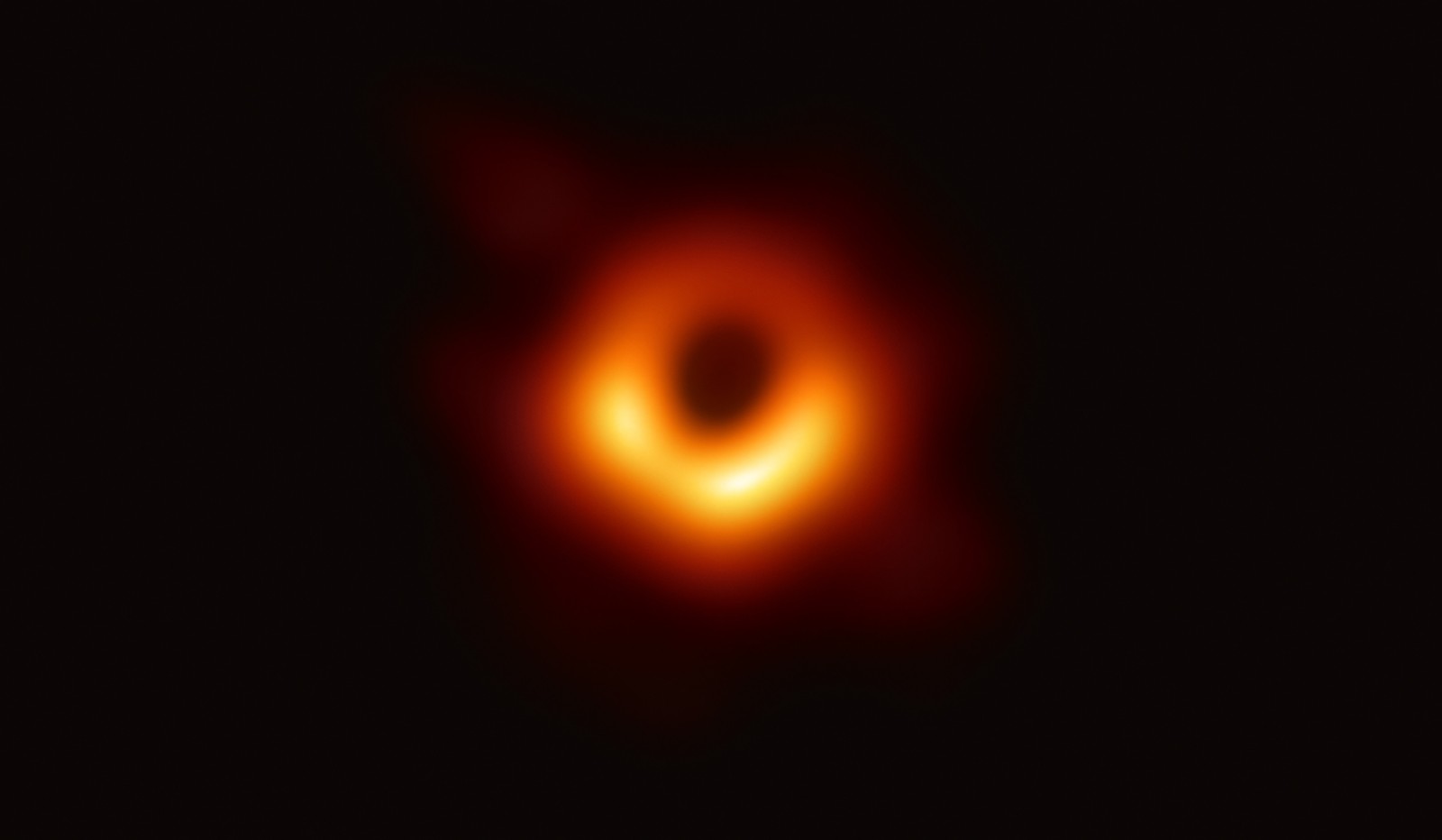
Reconstruction · EHT Collaboration / ESO · eso1907a
M87*. A model image from millimetre-wave visibilities. The dark interior is the black-hole shadow: lensed photon paths, not a picture of the horizon surface.
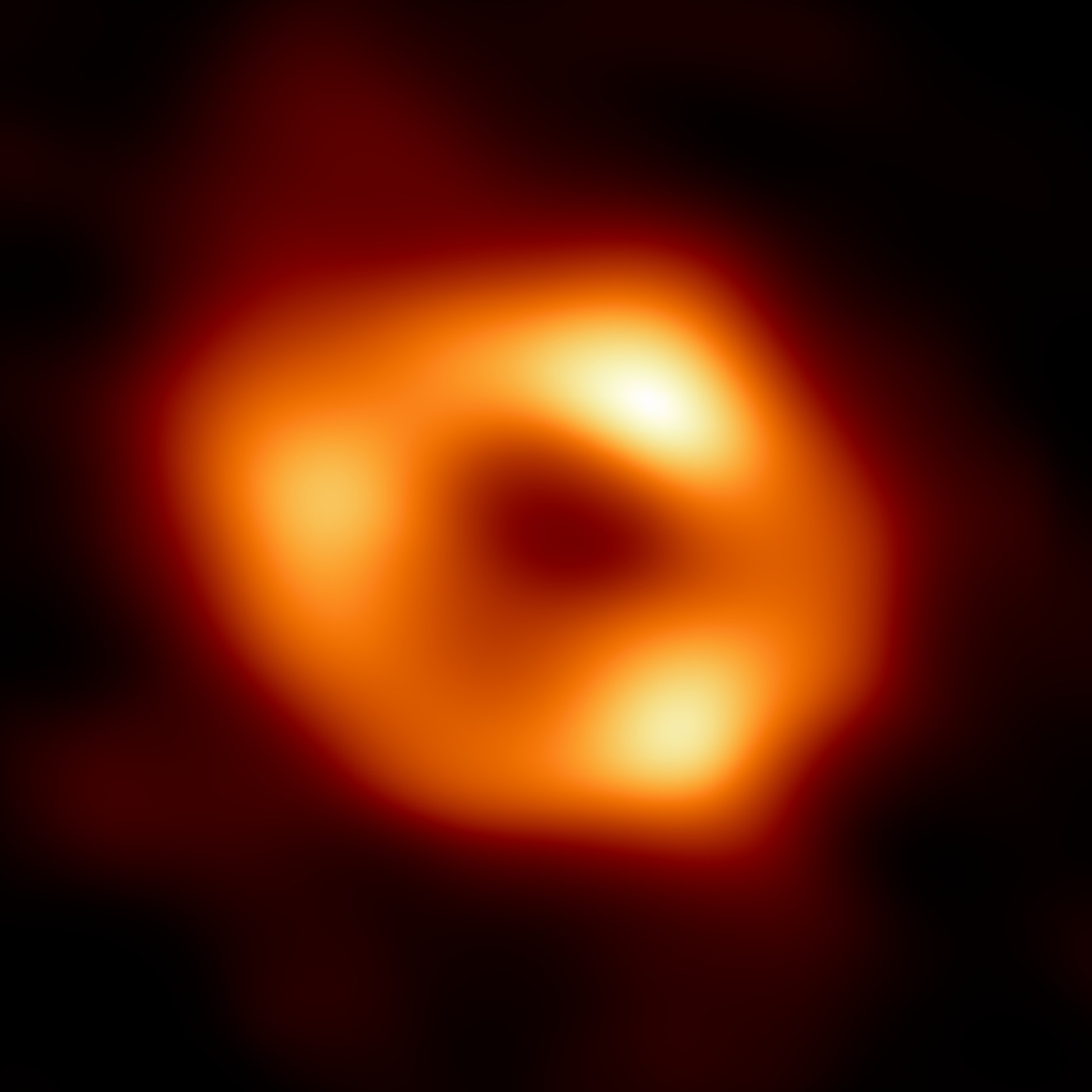
Reconstruction · EHT Collaboration / ESO · eso2208
Sagittarius A*. A second, independent shadow, this time in our own galaxy. Different mass, different dynamical time, same kind of trace.
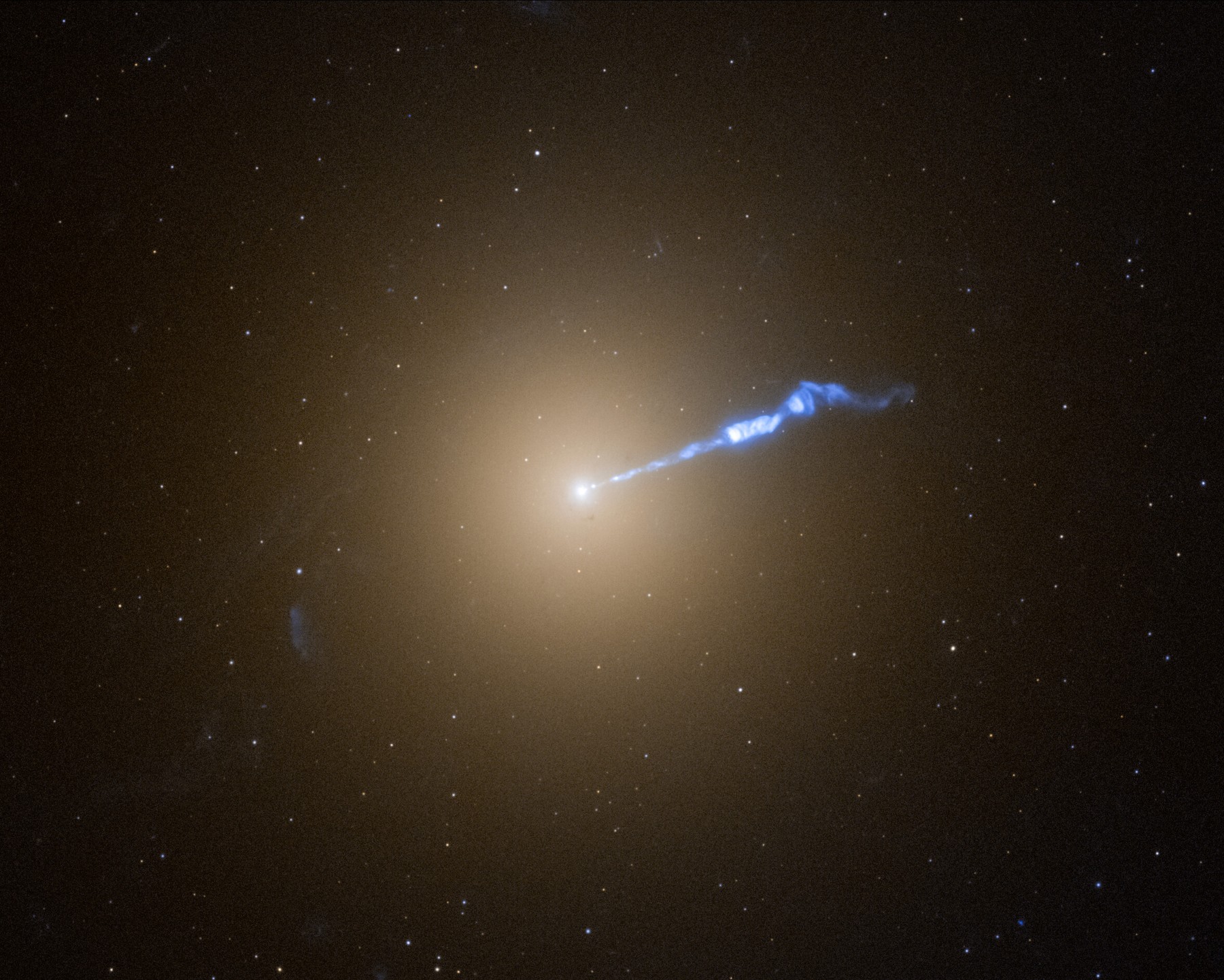
Documentary image · NASA / ESA / Hubble / A. Lessing / E. Baltz / M. Shara / J. DePasquale (STScI) · heic2411b
Plasma, collimated for three thousand light-years, leaving a 6.5-billion-solar-mass engine. The jet is the exhaust of accretion, not a picture of the hole.
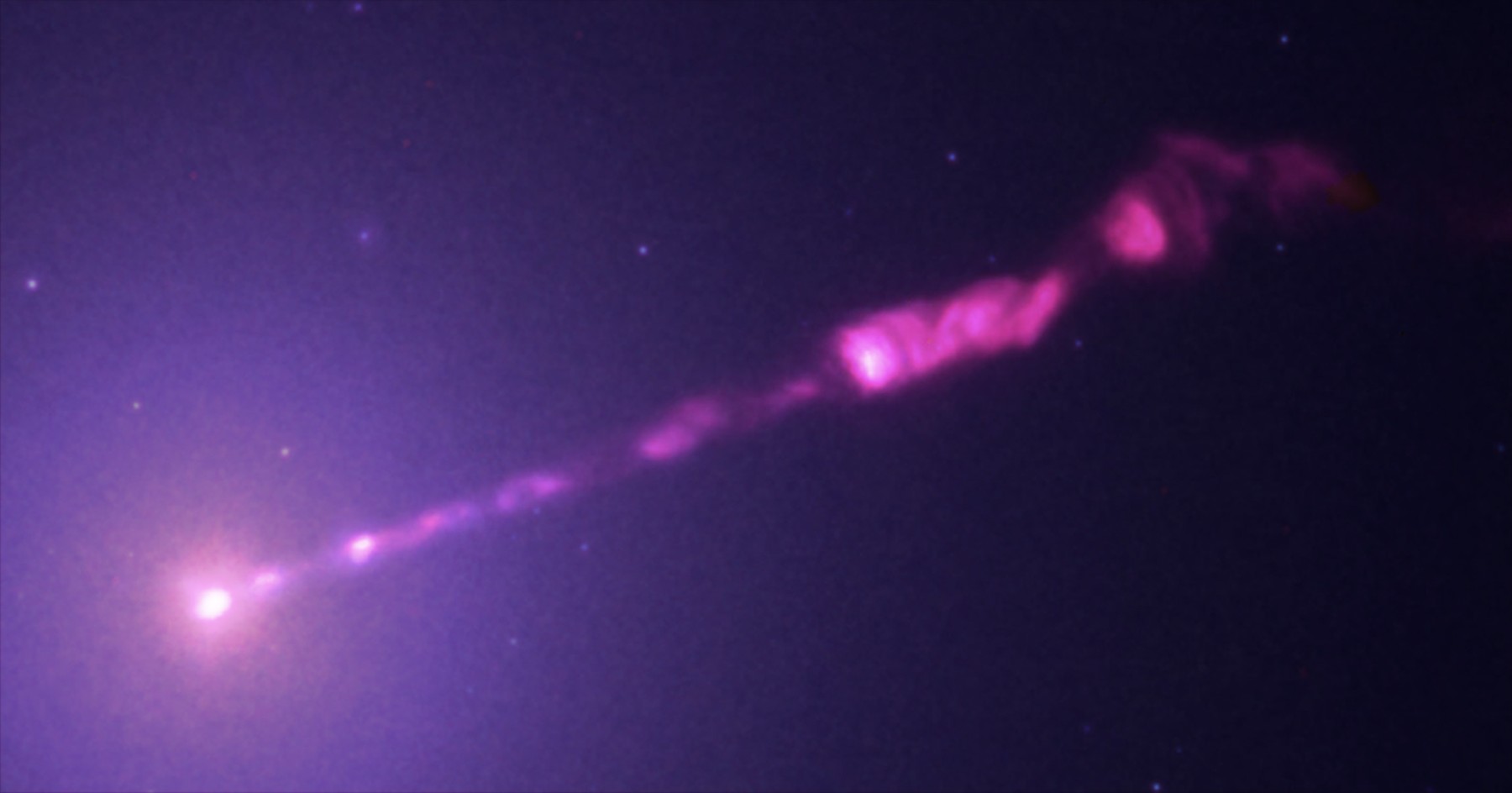
Documentary image · NASA / CXC / STScI / VLA · CXC 2026
The same jet in X-ray, optical, infrared and radio. Knots are shocks in the outflow, still powered from the unseen centre.
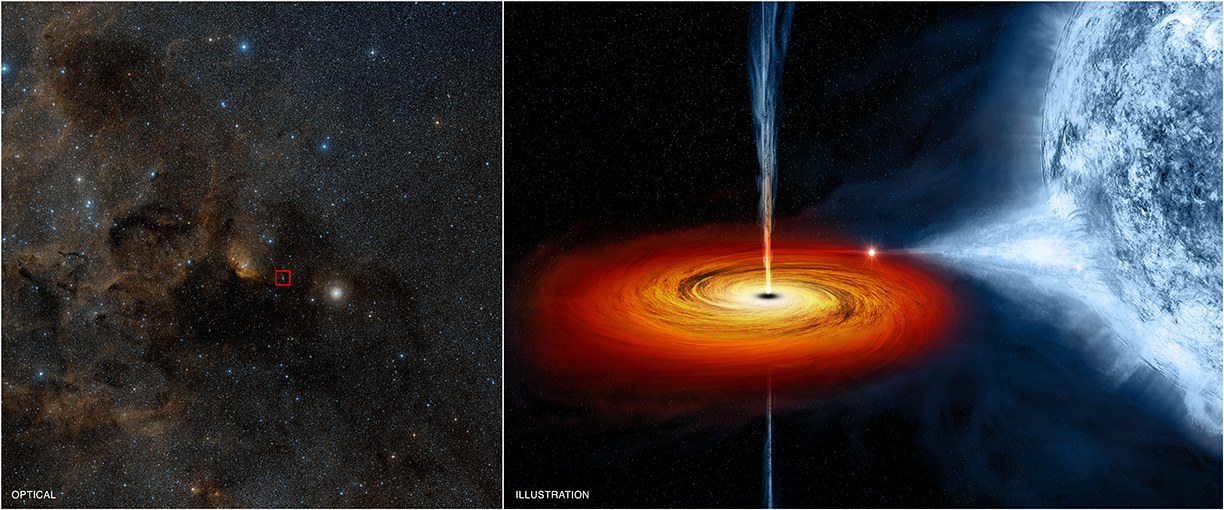
Illustration · NASA / CXC / M. Weiss
Cygnus X-1. A stellar-mass black hole argued from dynamics plus an X-ray companion: accretion shining long before matter reaches the horizon.
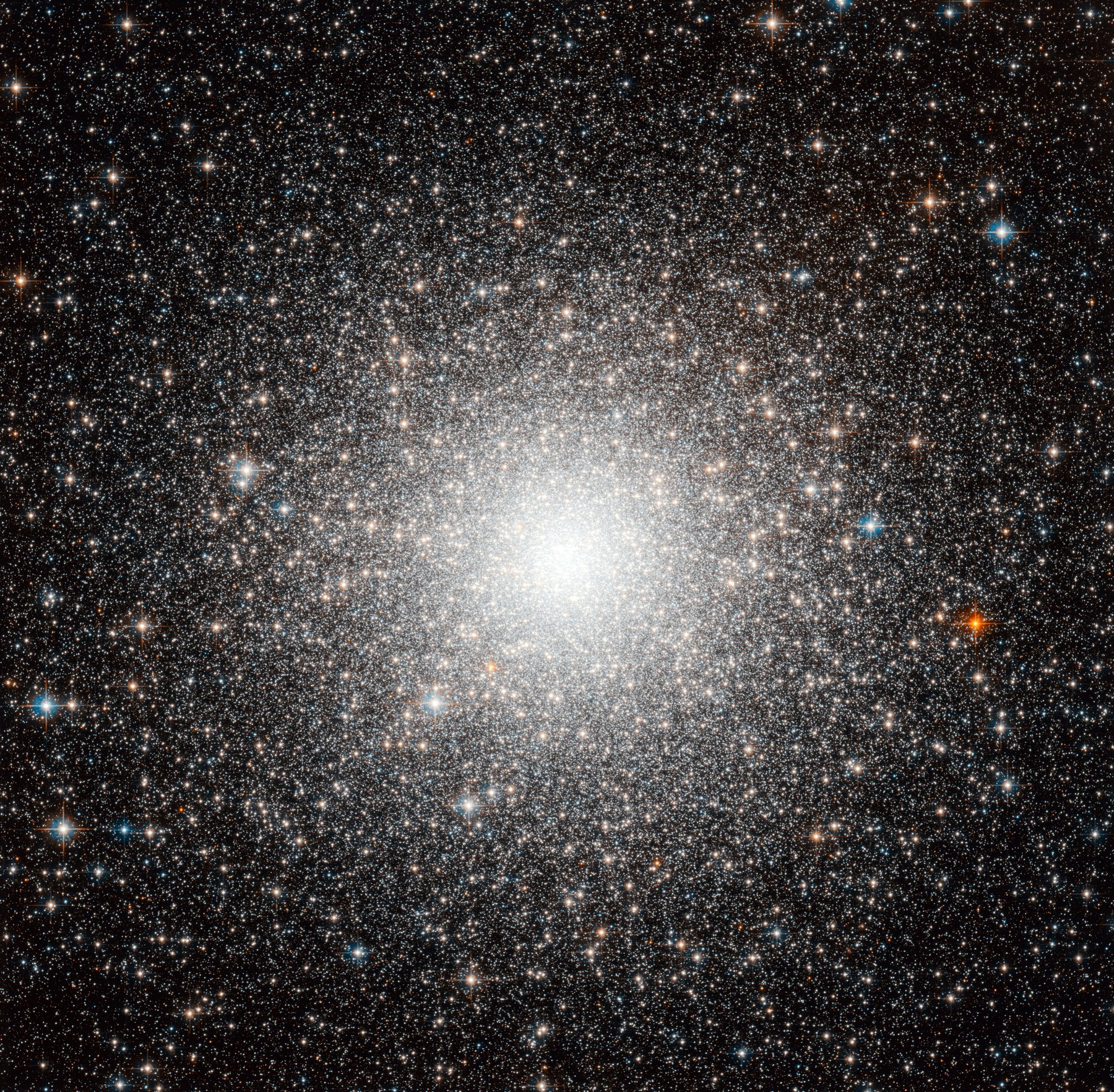
Documentary image · ESA / Hubble / NASA · potw1145a
Gravitational lensing. Mass between us and a background galaxy bends the light into a ring. A black hole is the extreme of the same geometry.
Stellar motion
Stars at the Galactic Centre orbit an unseen 4-million-solar-mass object. The orbits are the trace. Nobel Prize 2020, Genzel and Ghez.
Accretion and X-rays
Gas falling inward heats and shines, in X-rays and in radio jets, long before it reaches the horizon.
Radio interferometry
Many radio dishes, listening as one ear the size of Earth. The EHT is this idea pushed to the event-horizon scale.
Lensed light
Photons that skim the photon sphere can orbit once or more and then escape. They draw the bright ring. Photons that do not escape define the shadow.
Absence
Sometimes the evidence is a mass with no surface: bursts, pulsations or a last stable orbit that would not exist on a hard star.
Hard · this walk’s channel
Gravitational waves
A channel that does not use light at all. Binary black holes, even when they carry no accretion disk, still disturb spacetime.
None of these photograph the horizon. The living field is a computed lensing model.